Keep a Character Consistent Across AI Images
Build consistent AI characters across images with a reference sheet, reusable identity prompt, three scene illustrations and a checklist that catches drift.
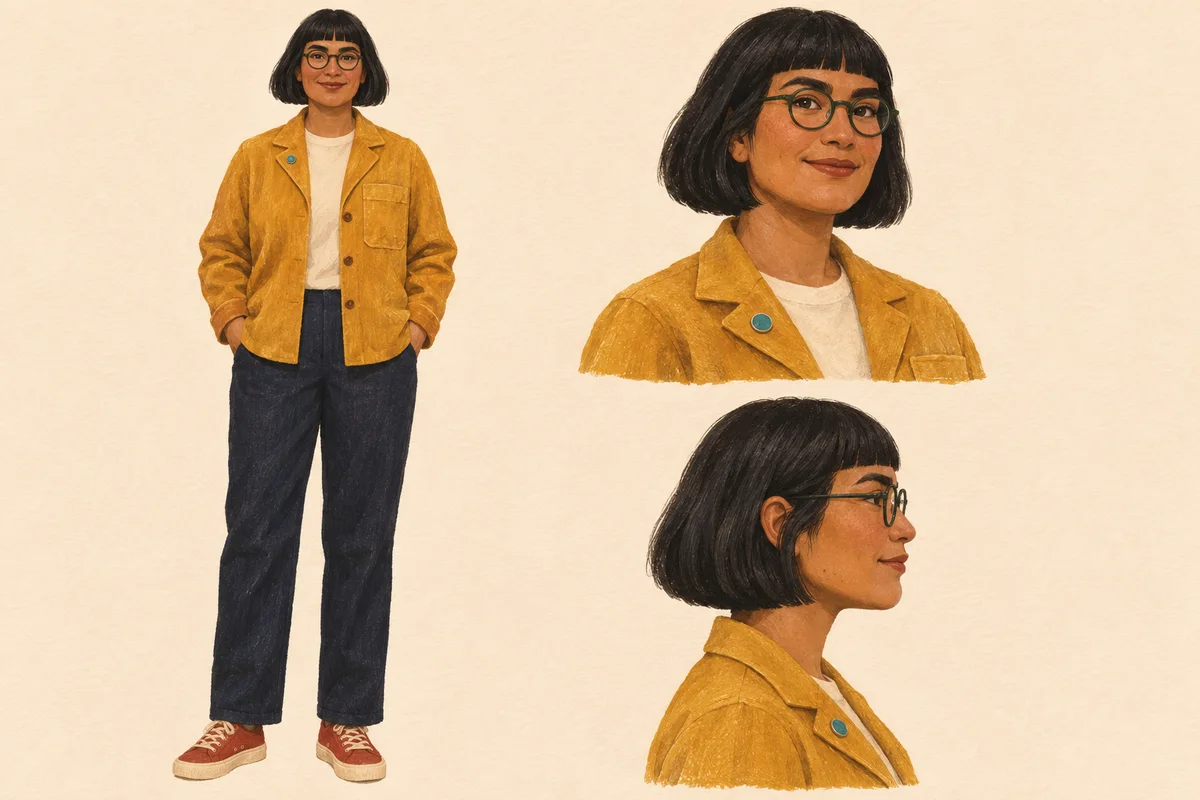
To make consistent AI characters across images, give the next scene a character to refer to and a short list of features to preserve. A name such as Lin can help you organize the project, but the name alone does not describe her face.
For this guide, we made an original adult character, an AI character reference sheet and three separate scene illustrations with an AI image tool. We also kept a version made from a much shorter brief without the reference. The comparison is about still-image continuity; it does not measure this website's generation results or establish a success rate.
Choose features you can actually recognize
Lin is a fictional woman in her early thirties. Her black bob ends at the chin and has a straight fringe. She wears small round dark green glasses, a mustard work jacket and a cream shirt. Her jacket has a teal circular pin on her right lapel and a patch pocket on her left chest.
Those details give the next image something more specific than “the same woman in a yellow jacket.” Glasses can remain while the face changes. Yellow clothing can remain while the garment becomes a different design. Keep the face and the outfit as separate checks.

| Feature | What this reference asks you to preserve |
|---|---|
| Face | Broad oval shape, warm brown complexion, straight dark eyebrows and an adult appearance |
| Hair | Chin-length black bob and straight fringe |
| Glasses | Small round lenses with dark green frames |
| Clothing | Mustard work jacket, cream crew-neck shirt and indigo trousers |
| Sided details | Teal pin on the wearer's right; patch pocket on her left |
| Shoes | Rust-red low-top canvas shoes with cream soles, when visible |
“Wearer's right” means the character's right side. In a front view it appears on the viewer's left. Stating the side this way helps you check whether an otherwise convincing image has mirrored the costume.
Make the reference useful at the next camera distance
The full-body view records the trousers and shoes. The closer views make the glasses, jaw shape and haircut easier to compare. Diffuse light keeps shadows from obscuring the features you need to read. Runway's reference-image guidance also recommends natural, even light and a neutral expression as useful starting conditions. Its controls belong to Runway; this site's workflow uses the reference attachments available for the chosen model.
Do not pack a sheet with tiny faces just to include every angle. If the next result is a portrait, use a reference in which the face is readable. If footwear matters in a wide shot, keep a clear full-body view. Check that the views on the sheet already agree before using it to judge other images.
Reuse the identity instructions, then change the scene
Keep a stable identity paragraph and replace the action and location beneath it. This is the identity portion used to organize our scene briefs.
Use the attached image as the identity and gouache-style reference for the same fictional adult woman. Preserve her broad oval face, warm brown skin, straight dark eyebrows, chin-length black bob with straight fringe, and small round dark green glasses. Keep her mustard work jacket, cream shirt and indigo trousers. The round teal pin stays on her right lapel, and the single large patch pocket stays on her left chest. When visible, keep the rust-red canvas shoes with cream soles. Change the location and pose without changing these identity details. No text, logos or added accessories.
This paragraph describes what to keep. Each scene still needs its own visible action and framing. Use these scene additions as editable starting points.
| Scene | Action and framing to add |
|---|---|
| Plant market | Hold one terracotta pot in both hands at waist height; show a readable near-front three-quarter view in neutral daylight |
| Library | Sit at a wooden desk with an open book; keep the face in three-quarter view and the chest details visible |
| Railway platform | Wait beside a bench in a full-body view; keep the shoes visible and avoid additional people or signs |
Keep the same character in different scenes
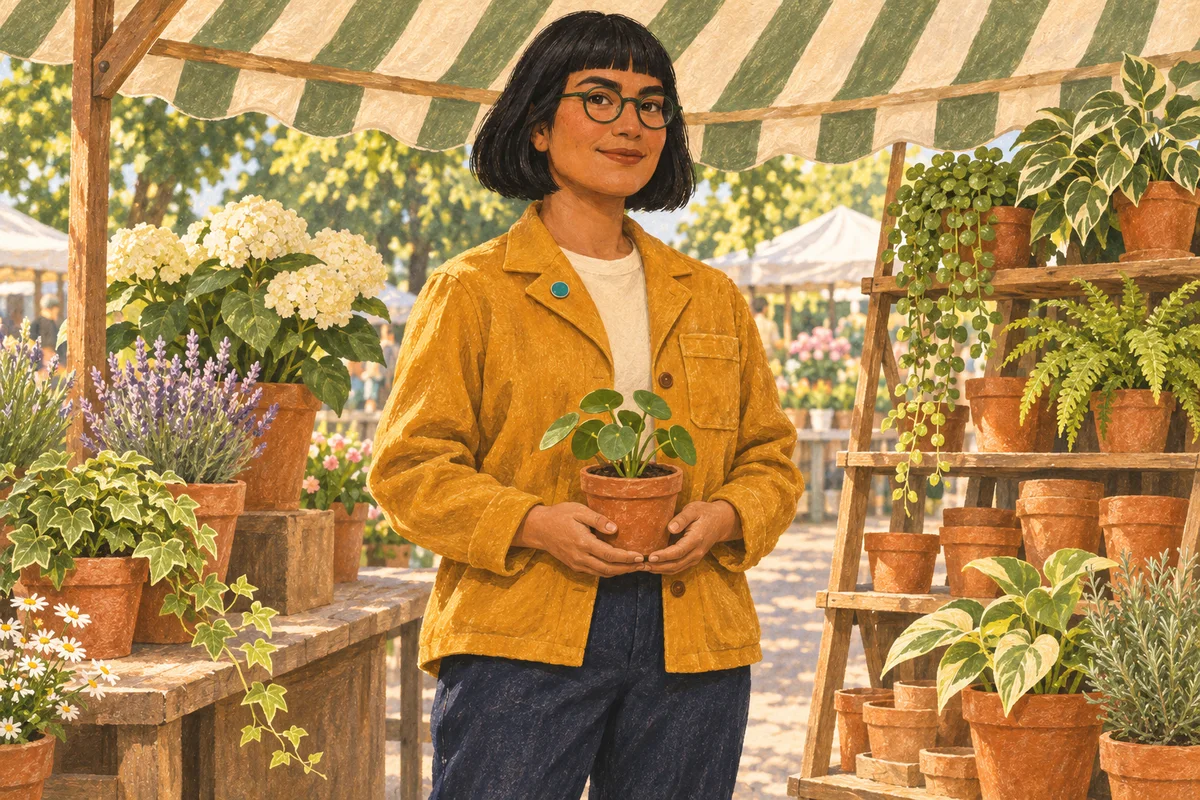
The market image makes the glasses, fringe and pin easy to see. Her pose changes from hands in pockets to holding a pot. The requested identity details can remain useful while her hands do something different. Do not judge the shoes here; they are outside the picture.
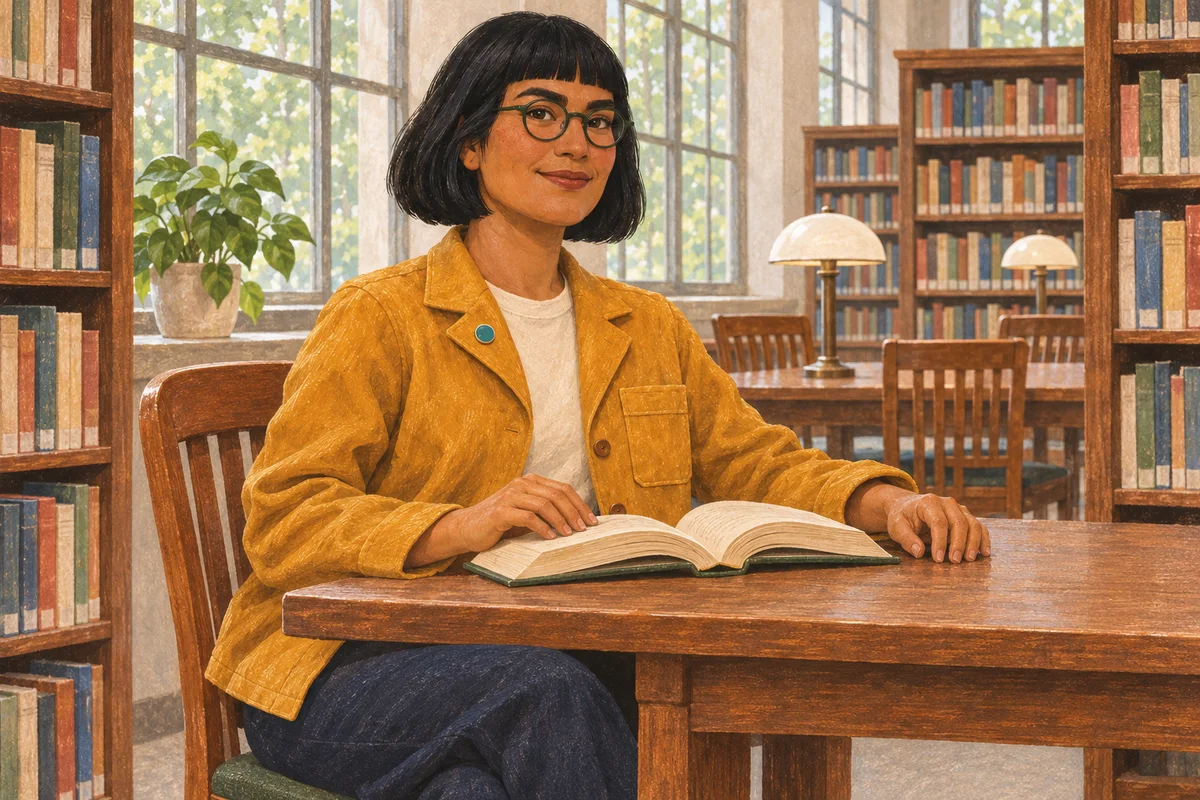
At the library, the head angle and seated pose change the visible outline. The pocket also appears narrower and taller than on the front reference. Compare its design rather than claiming an exact garment match from the shared color. The shoes are still hidden, so this picture provides no evidence about them.
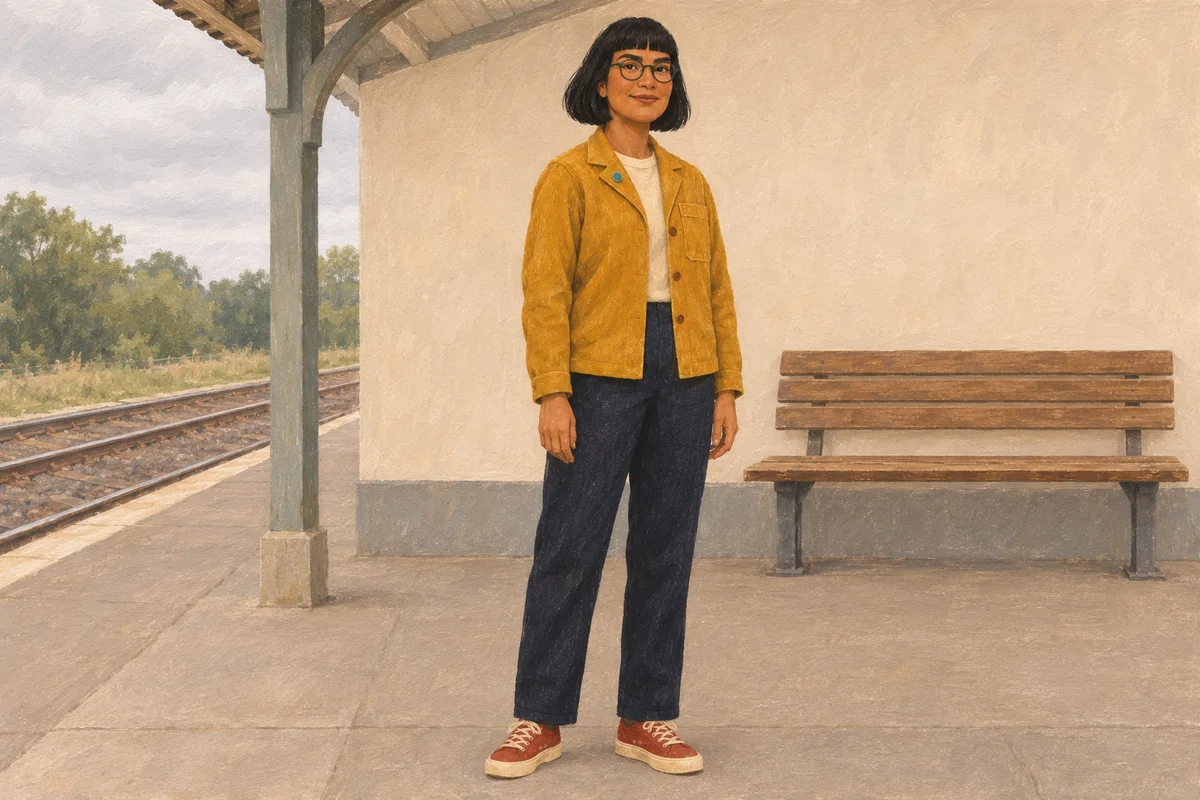
The platform scene shows rust-red shoes and cream soles. Moving upward through the trousers and jacket, the pocket is still on the wearer's left chest, although its shape should not be treated as an exact match to the reference. For the face, open the full image rather than relying on a small page thumbnail. A wider shot can look consistent at a glance while hiding a changed hairline or frame shape.
Keep the version that misses the identity brief
For comparison, the short brief below omitted the reference sheet and the detailed identity paragraph.
An adult woman with glasses and a yellow jacket holding a potted plant at an outdoor market. Warm editorial gouache illustration, landscape composition, no text or logos.

Here the hair is wavy brown, the glasses are larger, and the jacket has a hood. Earrings and a shoulder bag have appeared too. These are visible departures from the character sheet, so this version does not meet our identity brief. Keep the picture as a rejected version without turning it into a claim that a particular model always fails without references.
The reference, prompt length and detailed constraints all changed in this comparison. It is a visible counterexample to accepting the broad description as an identity specification, not a controlled benchmark of reference-image performance.
Prepare the next scene in the current image tool
Open the AI image generator and select a model that accepts images. On 2 November 2026, the visible default was Nano Banana 2 · Ext and the interface provided a Reference attachment area. The catalog also distinguished text-only choices such as Imagen 4. Choose an image-capable model for this workflow.
Attach the original reference, confirm its thumbnail is present and paste the identity paragraph with one scene addition. Pick a supported aspect ratio, read the current credit limit and submit only when that setup is correct. For the next scene, explicitly refer back to the original sheet. Replacing it with each newly generated result can make an unwanted change part of the next reference.
If you also attach a location or style image, explain its job. A background reference containing another person introduces a competing face. Our multiple-reference guide shows how to separate subject, setting and style responsibilities.
Ask for one correction you can verify
If the glasses become square, request round dark green frames while preserving the current face, pose and setting. If the pin switches sides, specify the wearer's right again. Inspect the entire new result after a correction; a local request can still redraw other details.
Keep the original sheet, prompts and rejected versions together. Mark a detail as hidden when the scene does not show it. This gives the next review an honest starting point, particularly when someone else will decide which pictures belong in the same character set.
Sources and image notes
- Google image generation and editing documentation
- Runway reference-image preparation guidance
- Current image-generation interface
Checked on 2 November 2026. Lin is an original fictional adult. The sheet and scene illustrations were created with an AI image tool; they do not establish exact real-person reproduction or continuity between video frames.